


 CART
0
Itemes
0.00
CART
0
Itemes
0.00
The short answer: a nebulizing diffuser turns neat essential oil into a micron-fine dry mist, with no water and no heat added at any point. "Nebulize" just means breaking a liquid into a fine spray of tiny droplets — the same principle as a medical nebulizer, applied to aromatic oils. Because nothing dilutes the oil, what reaches the room is the oil's own character at full strength, and it stays that way from the first minute to the last.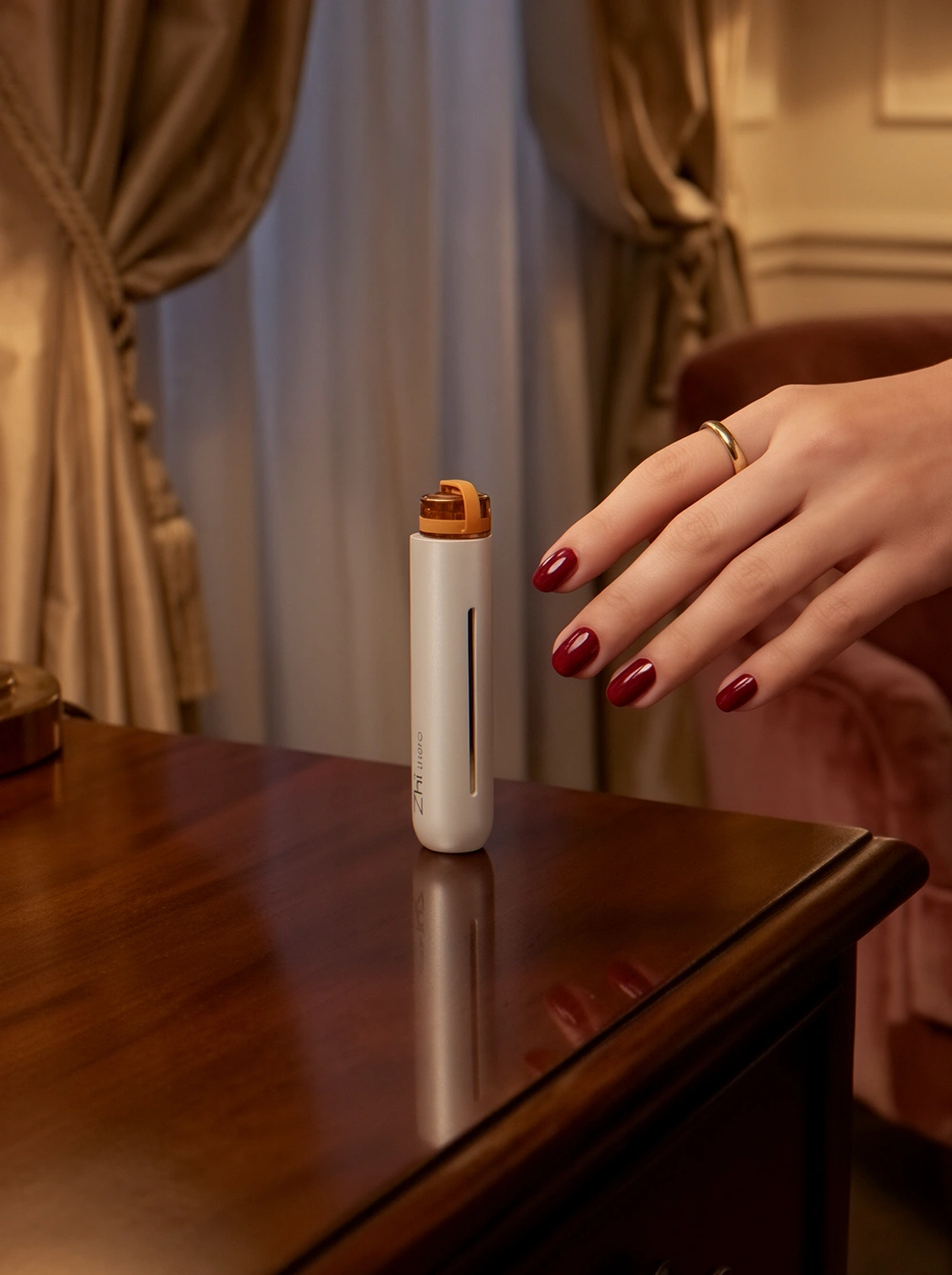
At the heart of a modern nebulizing diffuser like Zhithera is a precision mesh that vibrates thousands of times per second, shearing liquid oil into a fine mist at room temperature. The engineering is covered in detail in how micro-mesh atomization works, but the sequence is simple:
Heat alters the delicate aromatic structure of an essential oil, and water dilutes it. Keeping the whole process cool and waterless preserves the oil's profile and delivers a stable, full-strength scent rather than one that thins out. It also removes standing water from the equation entirely, which is what makes upkeep so much simpler — there is no tank to empty or rinse, only an occasional wipe of the mesh. That hygiene case is unpacked in why waterless diffusers are more hygienic and low-maintenance.
| Nebulizing (waterless) | Ultrasonic (water-based) | |
|---|---|---|
| What reaches the room | Neat oil, undiluted | Water carrying a small share of oil |
| Scent strength | Full strength, steady throughout | Softer, fades as the tank empties |
| Humidity added | None — the mist is dry | Yes, gently humidifies |
| Upkeep | Occasional wipe of the mesh | Empty and rinse the tank between uses |
| Getting started | Add oil and switch on | Measure water, add drops, top up |
Weighing the two side by side in more depth? The full comparison of waterless vs ultrasonic diffusers breaks down which suits which home.
Less than most people assume, because the lower settings work in short bursts and consume nothing during the pause. On a Zhithera D1, a full 6.5 ml pod works out at roughly 0.14 ml per hour on the low intermittent setting — around two days of everyday use — about 0.87 ml per hour on medium, and about 4.3 ml per hour on high continuous. That highest setting exists to fill a large space quickly, say before guests arrive, rather than to run all day. Pod life and oil economy are covered in full in the pod lifespan and scent longevity guide.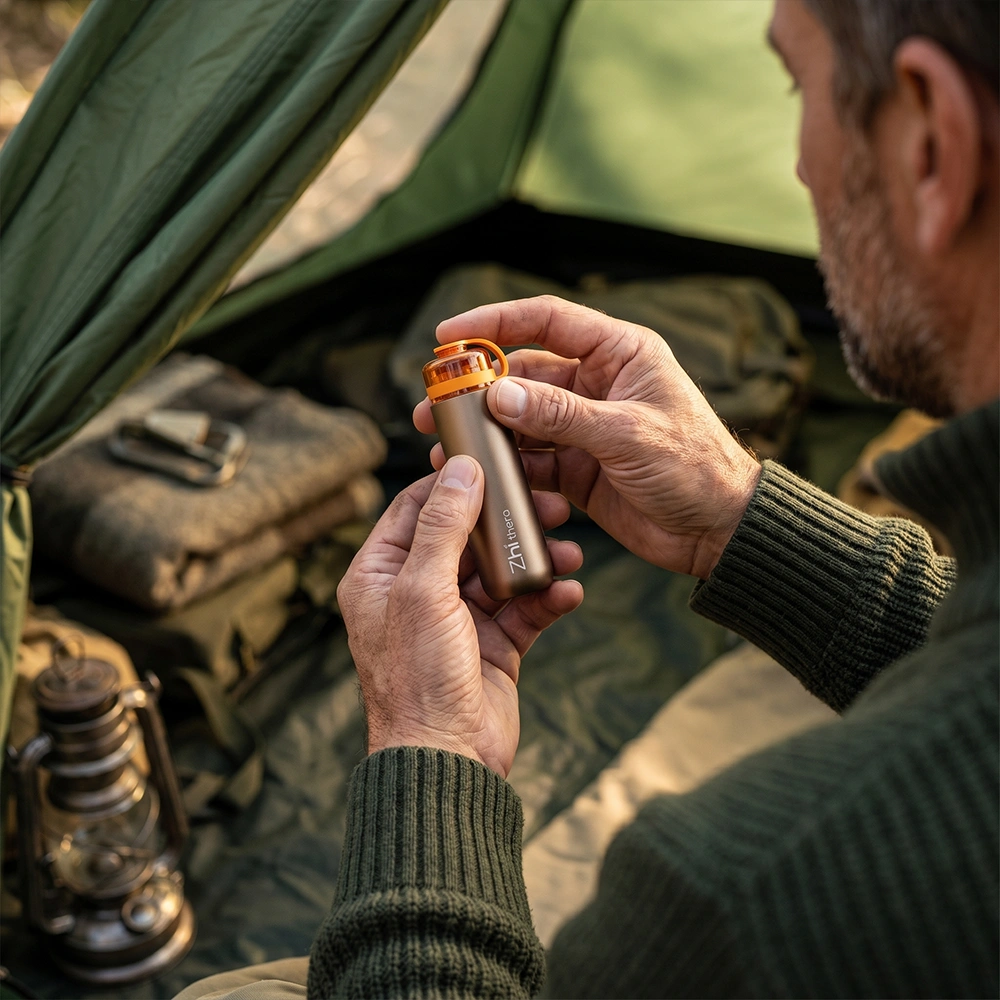
That comes down to what the chamber is made of. Pure essential oils, and citrus oils rich in natural terpenes in particular, slowly damage ordinary plastic chambers — which is why a good number of diffusers only accept diluted, water-based scent liquids. Zhithera's chamber is built from oil-resistant materials, so it runs both pure essential oils and designer fragrance oils directly. Moving from a bright botanical morning scent to a warm, long-holding evening one means swapping the pod, not the device. (Curious about the difference between the two oil types? See essential oils vs fragrance oils.)
Quiet, portable and rechargeable, it fits the bedroom, the office, the car and travel. It suits anyone who wants a clean, true-to-oil scent without the upkeep of a water tank, and who likes dialling intensity up or down to match the room and the moment. It is the less obvious choice in one case: if what you actually want is added moisture in a dry room, an ultrasonic unit — or a proper humidifier — answers that directly. New to all this? The beginner's guide to aromatherapy at home is a friendly place to start, and the waterless aromatherapy diffusers collection shows the range.
Essential oils are aromatic plant extracts intended for diffusion only. They are not intended to diagnose, treat, cure or prevent any condition; keep oils and devices out of reach of children and pets, and diffuse in a well-ventilated space.


Zhithera – A Professional Aromatherapy Delivery System Zhithera designs waterless, heat-free diffusers that atomize pure botanical essential oils and designer fragrance oils into a micron-fine mist using Advanced Micro-Mesh Atomization. Built for consistent, controllable aromatic states — focus, relaxation, recovery and restful ambiance — our range serves homes, offices, cars, spas, hotels and retail spaces worldwide. Every batch is traceable and supported by recognized third-party testing, with dependable wholesale and distribution support for partners around the globe.
Aromatherapy & Essential Oil Notice
Zhithera essential oils and fragrance oils are non-medical aromatic products intended for diffusion only. They are not intended to diagnose, treat, cure or prevent any disease or condition, and are not medical devices. Do not apply oils to skin or ingest them, and keep oils and devices out of reach of children and pets. Ensure good ventilation, and if you are pregnant, nursing or have a medical condition, please consult a qualified professional before use. Scent is experienced differently by everyone; discontinue use if any irritation occurs. We make no therapeutic, disinfecting or insect-repellent claims for any Zhithera product.