NEWS & BLOG · August 24, 2025 · By Zhithera Studio
Putting scents together is one of the pleasures of diffusing at home. Perfumers use a simple framework to decide what goes with what, and the same idea helps you choose oils that suit your room and the season. This guide explains that framework in plain language, then shows how to layer scents in practice with a cartridge diffuser.
Perfumers describe a scent as a pyramid of three notes:
A finished perfume usually has all three, so it changes pleasantly over time instead of fading flatly. Zhithera's fragrance oils are built this way. Orange Blossom, for example, opens on bergamot and green leaves, settles into orange blossom and white jasmine, and finishes on white musk, light cedar and amber. Reading the notes on a fragrance tells you how it will behave in the room.
Before pairing anything, map your own taste. Look at five broad directions: bright and fresh, warm and cozy, green and herbal, soft and floral, woody and resinous. Write down the three you keep coming back to; that is your scent map. If you like clean, airy mornings, citrus and fresh herbal notes tend to show up; if you like enveloping evenings, woody and soft floral notes appear more often.
Then test before you commit. Pick a few single oils that match your map and run each one on its own for a day, on the low setting, in the room you care about. Note your first impression, the character after an hour, and how long the scent stays noticeable. That gives you a personal reference list of what works where, and it tells you which oils deserve a place in your layering.
Mixing different oils inside one refillable cartridge is not something we recommend: the scents tend to muddy each other, and a mix can't be undone. Layering works better at room scale:
Pairings that work well layered across a day or between rooms:
Work with two or three scents at a time, give strong oils such as mint, tea tree and clove a short session, and keep notes on what you like so you can repeat a favorite. Scent is personal, so trust your nose over any rule. If you use a naturally thick oil such as sandalwood or patchouli from another brand, check compatibility before using or diluting it, as explained in why your diffuser mist looks weak, so the mesh stays clear.
Let the time of year guide you: green notes for spring, citrus for summer, warm woods for autumn and winter. Our seasonal scents guide has more ideas. Match the scent to the space, too: brighter notes for a desk, softer ones for a bedroom.
The type of oil matters as much as the notes. Pure botanical essential oils disperse quickly and fade quickly, because nothing is added to fix the scent, so they suit close range: a desk, bedside table, car or reading corner. The original four scents in Zhithera's 100 mL fragrance oil range use Givaudan fragrance materials and are composed with top, heart and base notes; they hold longer, stay consistent from batch to batch and suit larger rooms. A simple rotation might pair one or two essential oils for close-range spaces with a fragrance oil for the living room.
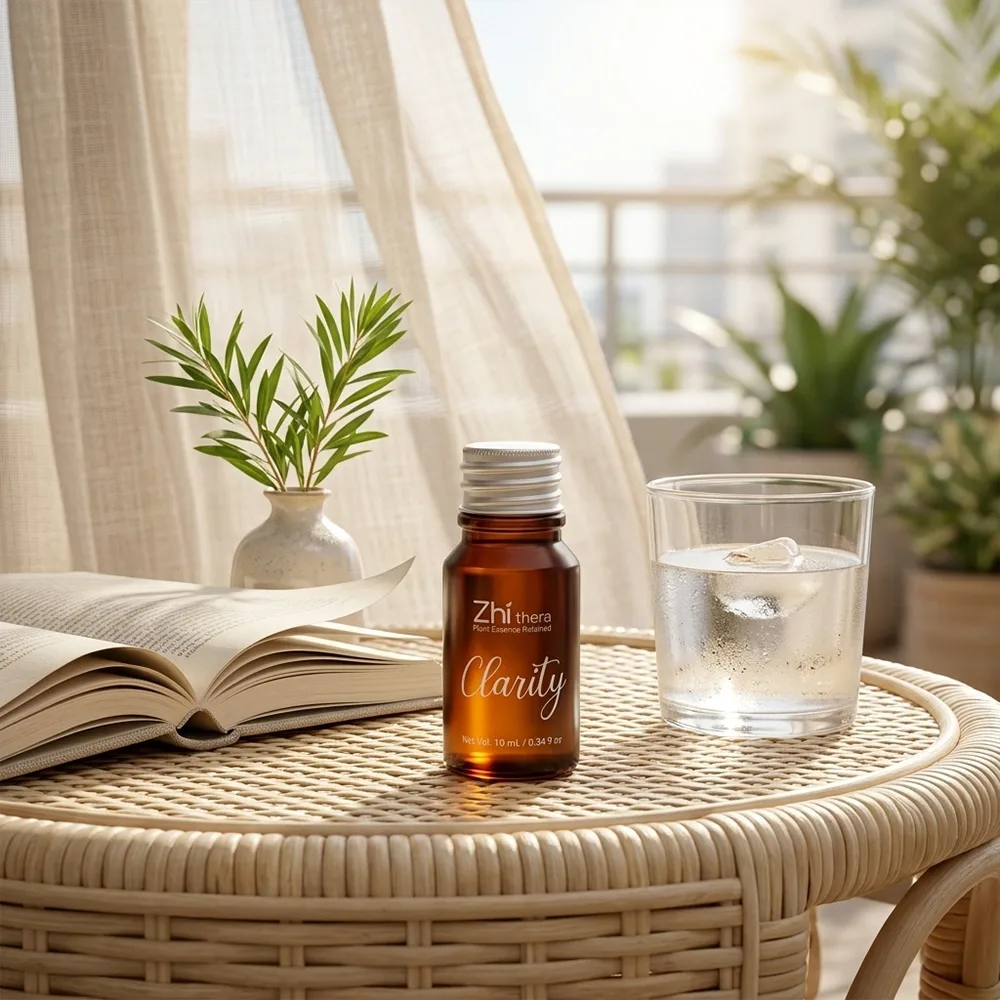
Zhithera's 6.5 ml cartridges are refillable and quick to swap, so trying a new pairing is just a matter of changing cartridges. The essential oil range, from Italian Bergamot and Brazilian Sweet Orange to Provence Lavender and Moroccan Rosemary, gives you a ready palette, and every scent runs in any Zhithera diffuser.
We don't recommend it. The scents muddy each other and you can't separate them again. Use one oil per cartridge and layer by swapping or by room.
Not for individual orders. Zhithera develops custom scents and private label for business partners, with a minimum of 1,000 units per scent. At home, you can build a personal combination from the essential oil and fragrance oil ranges by layering them as described in this guide.
The slowest, deepest part of a scent, usually woods, resins or musks, and the part that lingers longest.
Two or three you already like, ideally one bright and one warm, so you can hear how they play off each other.
Essential oils are aromatic products for diffusion only and are not intended to diagnose, treat, cure or prevent any condition.
Zhithera – A Professional Aromatherapy Delivery System Zhithera designs waterless, heat-free diffusers that atomize pure botanical essential oils and designer fragrance oils into a micron-fine mist using Advanced Micro-Mesh Atomization. Built for consistent, controllable aromatic states — focus, relaxation, recovery and restful ambiance — our range serves homes, offices, cars, spas, hotels and retail spaces worldwide. Every batch is traceable and supported by recognized third-party testing, with dependable wholesale and distribution support for partners around the globe.
Aromatherapy & Essential Oil Notice
Zhithera essential oils and fragrance oils are non-medical aromatic products intended for diffusion only. They are not intended to diagnose, treat, cure or prevent any disease or condition, and are not medical devices. Do not apply oils to skin or ingest them, and keep oils and devices out of reach of children and pets. Ensure good ventilation, and if you are pregnant, nursing or have a medical condition, please consult a qualified professional before use. Scent is experienced differently by everyone; discontinue use if any irritation occurs. We make no therapeutic, disinfecting or insect-repellent claims for any Zhithera product.