NEWS & BLOG · October 20, 2025 · By Zhithera Studio
A calm evening routine with scent can be very simple: one diffuser on a low setting, one or two soft oils you enjoy, and roughly the same time each night. Over a few weeks, the scent becomes a familiar cue that the busy part of the day is over, the aromatic version of dimming the lights. Below are oils worth trying, a three-step evening sequence, and how to set up a diffuser in a bedroom so it adds atmosphere without getting in the way.
Routines run on cues. The kettle going on, the lamp switched to warm light, screens put away. A scent is a particularly good cue because it fills the room quietly and doesn't ask anything of you. Used most evenings, the same aroma starts to signal "this is the slow part of the day". It doesn't need to be elaborate. If you're new to diffusing, our beginner's guide to aromatherapy at home covers the basics.
| Oil | Character | Good for |
|---|---|---|
| Provence Lavender | soft floral-herbal, the classic bedtime scent in aromatherapy tradition | the last hour before bed |
| Virginia Cedarwood | dry, quiet, pencil-shaving wood | reading in the evening |
| Gannan Aged Mandarin Peel | mellow, rounded, slightly dry citrus | an unhurried early evening |
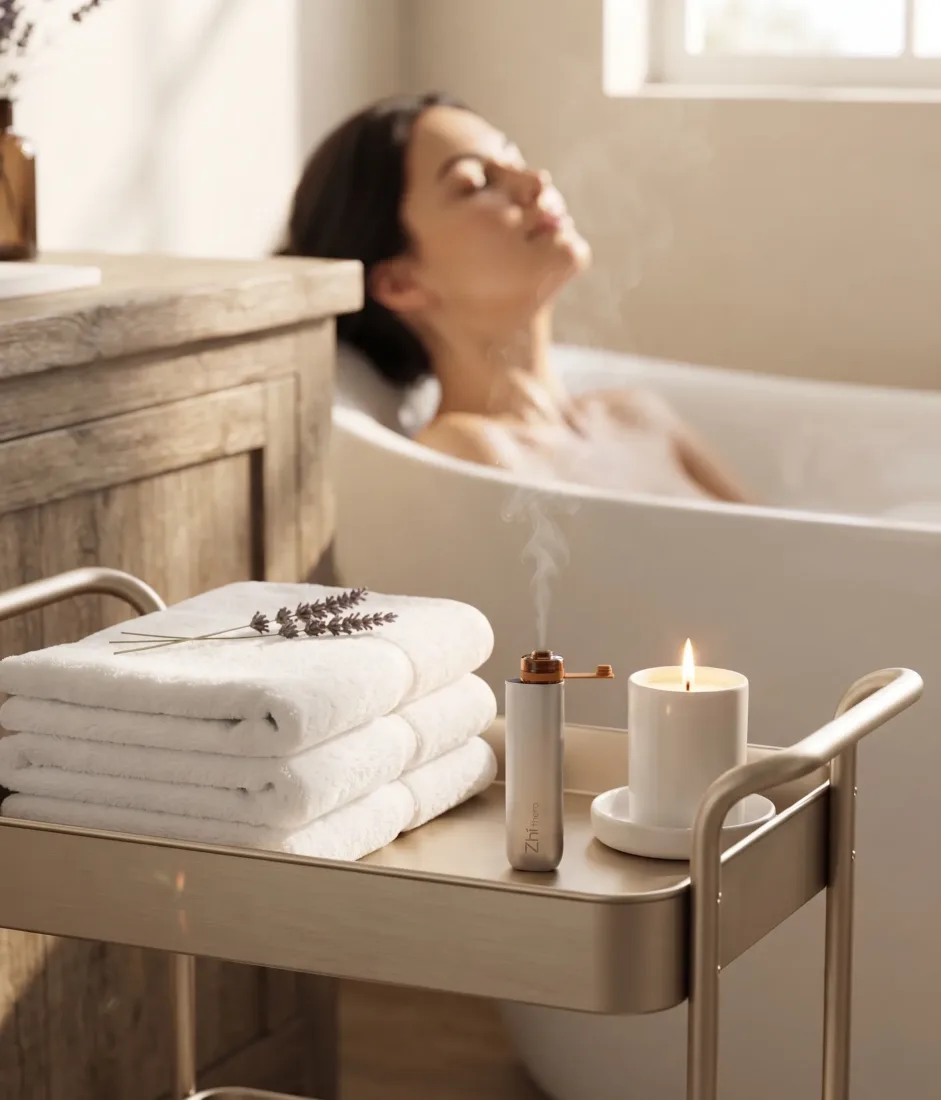
| South African Geranium | soft rosy-green floral | a bath or a slow skincare routine |
| Italian Bergamot | gentle citrus with a floral, Earl Grey edge | after dinner |
| Brazilian Sweet Orange | warm, sweet and cozy | cooking and tidying up |
| Eastern Elegant House (fragrance oil) | fig leaf and bergamot settling into sandalwood, cedar and vetiver | a living room through the evening |
All of these are in the Zhithera essential oil range, apart from Eastern Elegant House, which is one of the 100 mL fragrance oils. Virginia Cedarwood is blended with a natural atomization solvent (about 35% essential oil) and South African Geranium is about 85% essential oil, so both mist cleanly. Our article on lavender in the bedroom goes deeper into the most popular evening choice.
Keep one oil per reservoir, since mixing two oils in one fill tends to muddy both. You can still build a sequence by changing the scent as the evening goes on:
A spare refillable cartridge for each oil makes the swap take a few seconds.
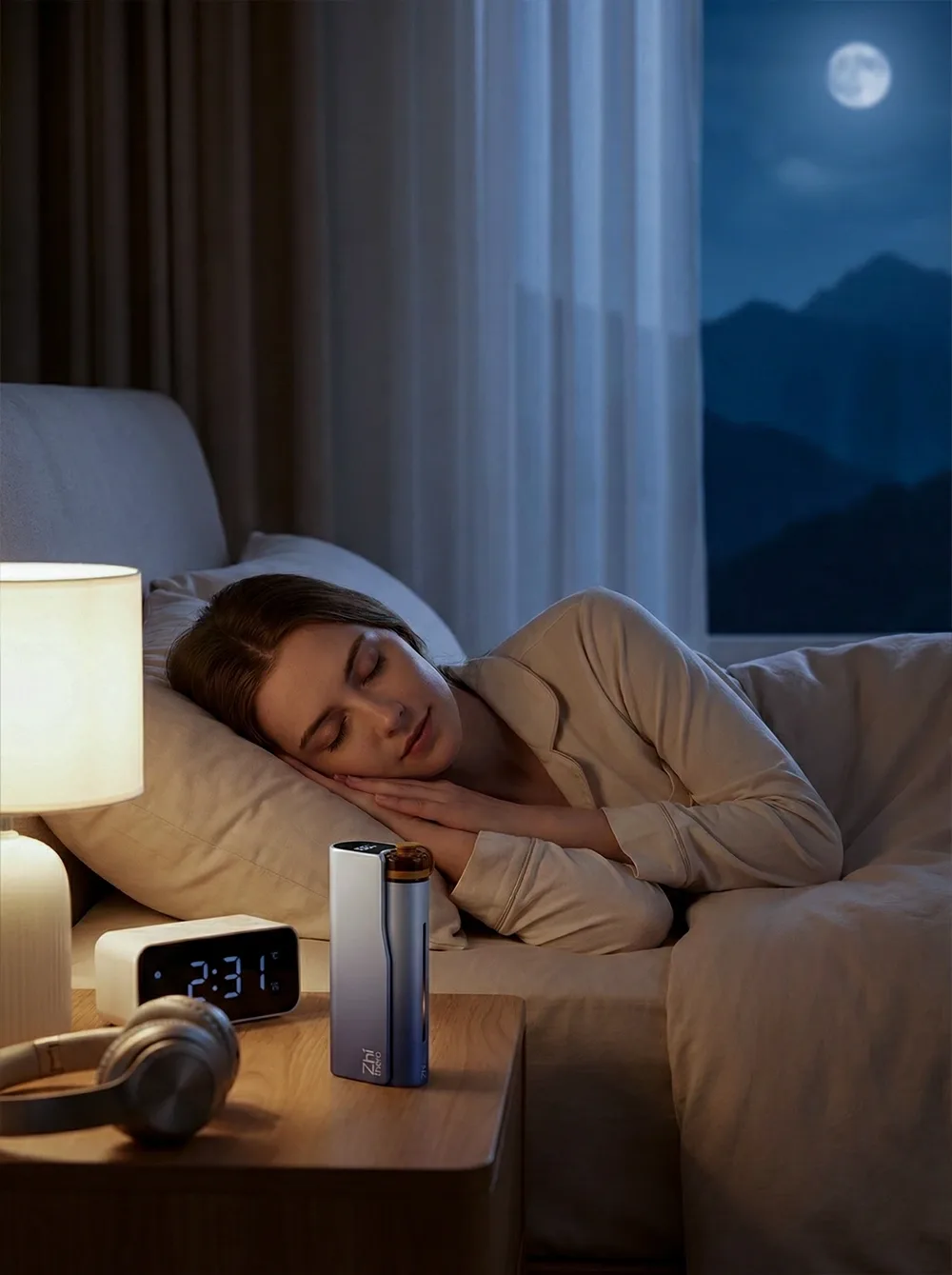
Our bedroom diffuser guide covers placement and settings for shared rooms in more detail.
A low intermittent setting is also the considerate choice when you share the room: the scent arrives in light waves rather than a constant cloud, so a partner is less likely to be bothered by it. With pets, keep the door open so they can leave, and keep the room ventilated. Cats in particular are sensitive to some oils. If you're pregnant or breastfeeding, or diffusing near a baby, check with your doctor first. Our guide to diffusing around children, pets and sensitive groups has the details.
Low on the D1 (10 seconds of mist every 5 minutes), or setting 2 on the D1 mini (15 seconds every 2 minutes). Both keep the scent light for a long session.
If you'd like to, use the low setting, make sure the reservoir has oil in it and point the outlet away from the bed. Never leave the continuous setting running unattended overnight, and remember the diffuser doesn't switch itself off when the oil runs out.
Provence Lavender is the traditional bedtime choice. Virginia Cedarwood, Gannan Aged Mandarin Peel and South African Geranium are softer alternatives if you prefer wood, mellow citrus or florals.
You can switch it off. Three quick presses turn the ambient light on or off on both the D1 and the D1 mini.
Fragrance here is about atmosphere and routine. Essential oils and fragrance oils are aromatic products for diffusion only and are not intended to diagnose, treat, cure or prevent any condition. Do not apply them to skin or swallow them, and keep them out of reach of children and pets.
Zhithera – A Professional Aromatherapy Delivery System Zhithera designs waterless, heat-free diffusers that atomize pure botanical essential oils and designer fragrance oils into a micron-fine mist using Advanced Micro-Mesh Atomization. Built for consistent, controllable aromatic states — focus, relaxation, recovery and restful ambiance — our range serves homes, offices, cars, spas, hotels and retail spaces worldwide. Every batch is traceable and supported by recognized third-party testing, with dependable wholesale and distribution support for partners around the globe.
Aromatherapy & Essential Oil Notice
Zhithera essential oils and fragrance oils are non-medical aromatic products intended for diffusion only. They are not intended to diagnose, treat, cure or prevent any disease or condition, and are not medical devices. Do not apply oils to skin or ingest them, and keep oils and devices out of reach of children and pets. Ensure good ventilation, and if you are pregnant, nursing or have a medical condition, please consult a qualified professional before use. Scent is experienced differently by everyone; discontinue use if any irritation occurs. We make no therapeutic, disinfecting or insect-repellent claims for any Zhithera product.